
Kush Dhebar

CULTURAL INTELLIGENCE BLOG SERIES

Cultural Intelligence
Understanding People Culture and Difference

A connected series of 9 articles exploring CQ how we understand people navigate differences and build better teams communities and creative work.
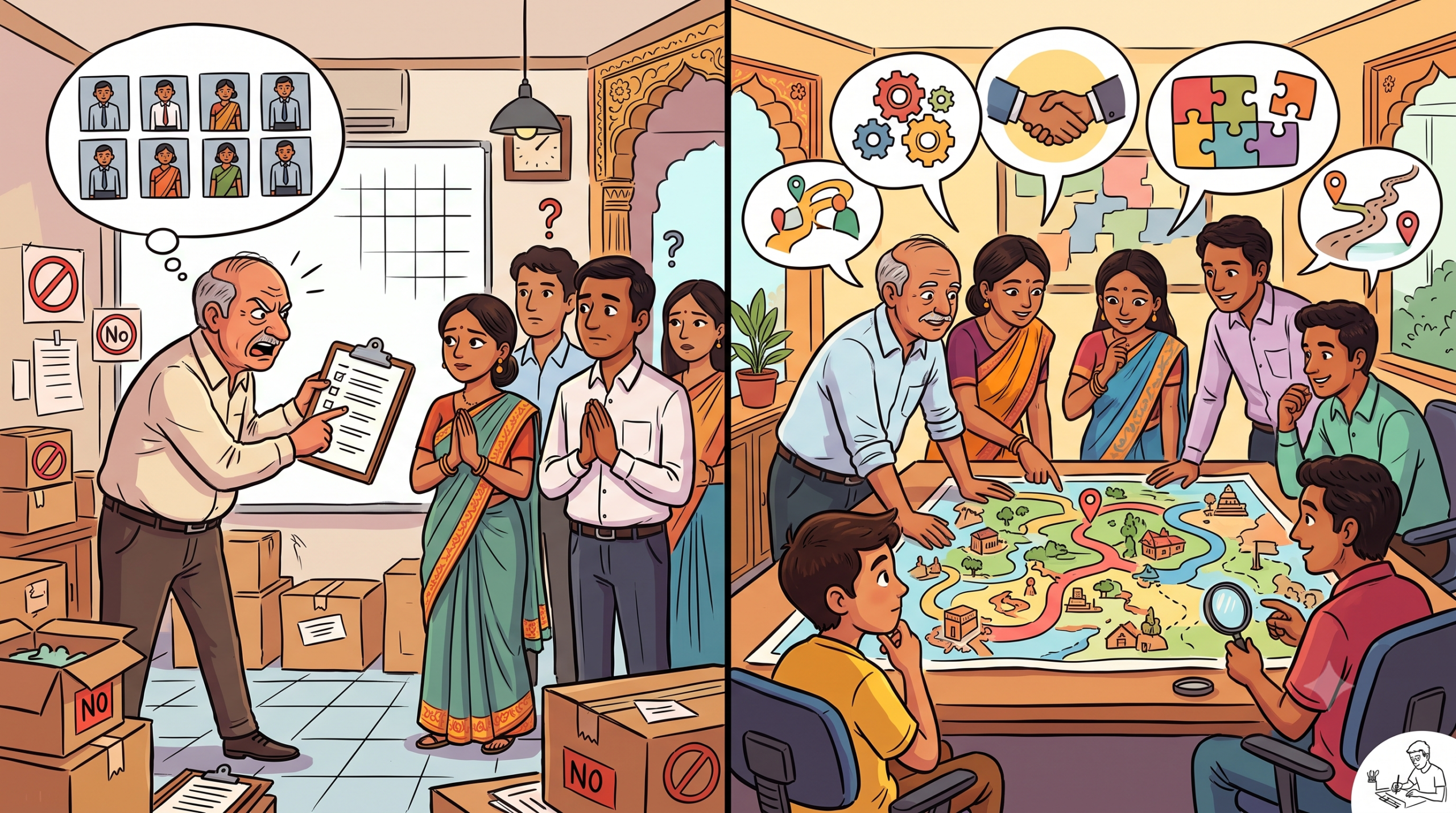
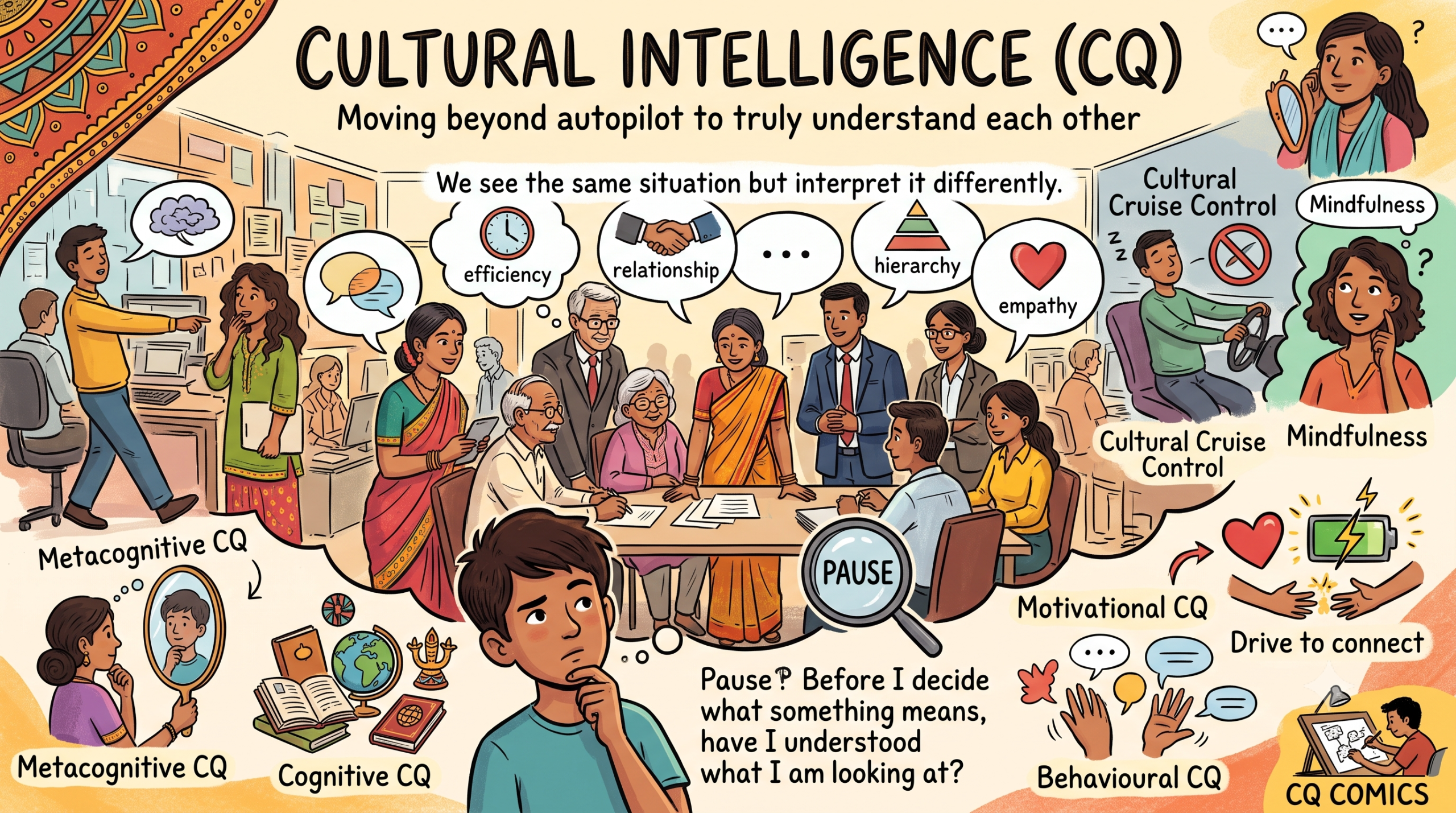
People do not always see the world in the same way. We can look at the same situation, hear the same words, or work toward the same goal or even participate in an act and still interpret and experience what is happening differently.
That is where Cultural Intelligence, or CQ (Culture Quotient), come into play.
Cultural Intelligence is an individual’s capability to function and manage one’s actions, roles and expectations effectively in culturally diverse settings. It is not simply about knowing facts about different countries or memorising lists of cultural dos and don’ts. It is about being able to notice cultural differences, understand what may be shaping them, stay motivated to work across them, and adapt how we behave. Observation and acknowledgement of diverse perspectives and interpretations is the key here.
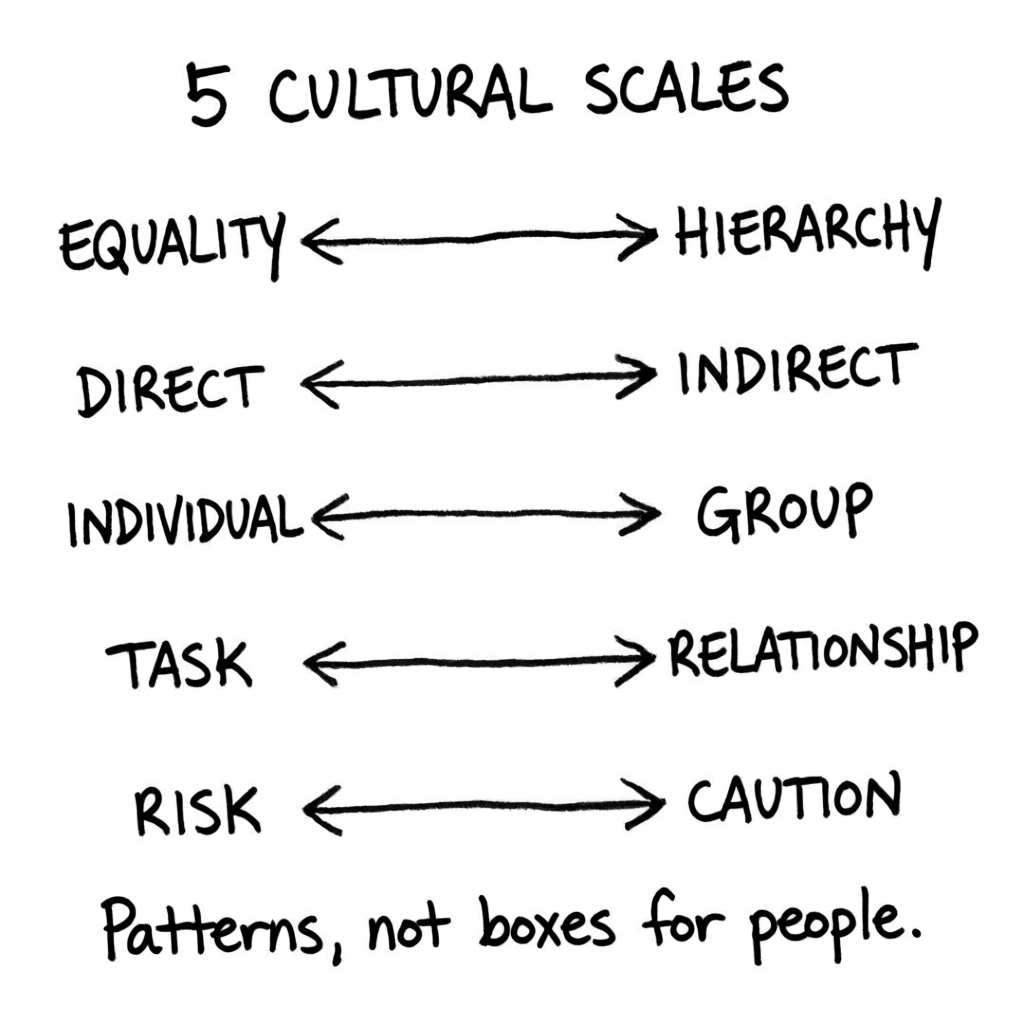
The idea becomes especially important in a world where “culture” is not limited to nationality. We move between generations, professions, organisations, communities and social environments every day. A workplace can contain different expectations about hierarchy, communication, relationships, risk and decision making even when everyone is sitting in the same office.
CQ IS COMMONLY UNDERSTOOD THROUGH FOUR CONNECTED DIMENSIONS.
This does not mean abandoning our own identity or accepting every behaviour. It means creating enough space between observation and interpretation to understand a situation more accurately.
CQ also matters because cultural differences can shape how teams work. Expectations around hierarchy, directness, individual or group priorities, relationships, tasks and risk can influence coordination and communication. Cultural intelligence can therefore contribute to collaboration, conflict resolution and creativity in diverse teams.
Most importantly, CQ is not a checklist of perfect behaviours. Culture is dynamic, and people are not stereotypes. The goal is not to become someone else. The goal is to become better at understanding the context in which we are interacting.
This is the starting point for the articles that follow.
We will explore what happens when we operate on cultural autopilot, why cultural knowledge is not the same as understanding, how motivation affects our ability to adapt, and why behaviour matters. We will also look at culture inside teams, culture as a material for creative strategy, and what the study of history can teach us about understanding people whose worlds may be very different from our own.

SUPPORTING ARTICLE

Stories, Research & Reflections

ARTICLE

ARTICLE

CULTURAL INTELLIGENCE Knowing About a CultureIsn’t the Same as Understanding It Cultural knowledge is useful. But cultural knowledge can also...
Read More →

ARTICLE

ARTICLE

CULTURAL INTELLIGENCE Your Brain Is onCultural Autopilot. Here’s How to Switch It Off Most of us like to think that...
Read More →
ARTICLE

ARTICLE

CULTURAL INTELLIGENCE The Skill We Need in a World of People from Diverse Backgrounds and Contexts We often talk about...
Read More →

ARTICLE

ARTICLE

CULTURAL INTELLIGENCE Why People ConsideredSmart Struggle Across Cultures Understanding another culture intellectually does not automatically mean we can work comfortably...
Read More →
ARTICLE

ARTICLE

CULTURAL INTELLIGENCE When ‘Being Yourself’ Is Not Enough: The Art of Cultural Adaptation “Just be yourself.” It is usually good...
Read More →