
CULTURAL INTELLIGENCE
Your Brain Is on
Cultural Autopilot.
Here’s How to Switch It Off
Most of us like to think that we observe the world objectively.
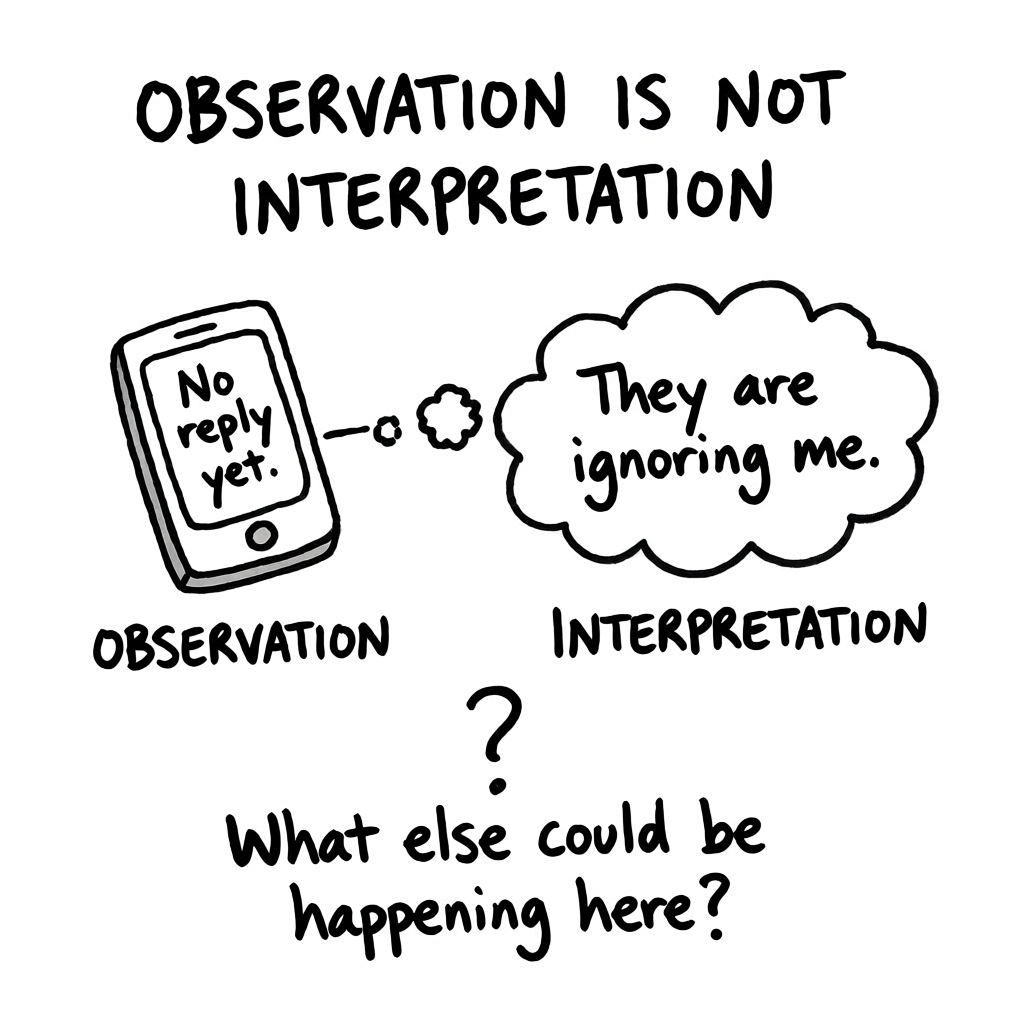
But observation and interpretation are not the same thing.
Someone does not reply immediately. We observe that they have not replied. Then, almost instantly, our brain may add a story: they are ignoring me, they are careless, they are not interested, or they disagree. The brain pushes us down that well known rabbit hole.
The same thing happens across cultures.
Thomas and Inkson describe the problem as a kind of cultural “cruise control”. We move through familiar situations using assumptions that usually work for us. Because those assumptions are familiar, we may not notice them at all.
Cultural Intelligence begins by interrupting that automatic process.
Metacognitive CQ is particularly important here. It involves inspecting our assumptions, planning for culturally different situations and monitoring what we observe.
The key skill is creating a small gap between what we see and what we think it means.
Imagine a manager working with colleagues who communicate differently from what the manager expects. A team member does not volunteer an idea during a meeting. One interpretation might be: “They have nothing to contribute.” Another possibility is that the person expects ideas to be invited by someone senior, or believes speaking without being asked could be inappropriate.
We do not know which interpretation is correct simply from the behaviour.
That is the point.
Cultural Intelligence encourages active, non-judgmental observation. Instead of treating our first interpretation as a fact, we can treat it as a hypothesis.
This is also why cultural knowledge alone is not enough. You can know that hierarchy matters in a particular context and still misread an individual. People do not perfectly represent cultural categories, and situations change.
This is also why cultural knowledge alone is not enough. You can know that hierarchy matters in a particular context and still misread an individual. People do not perfectly represent cultural categories, and situations change.
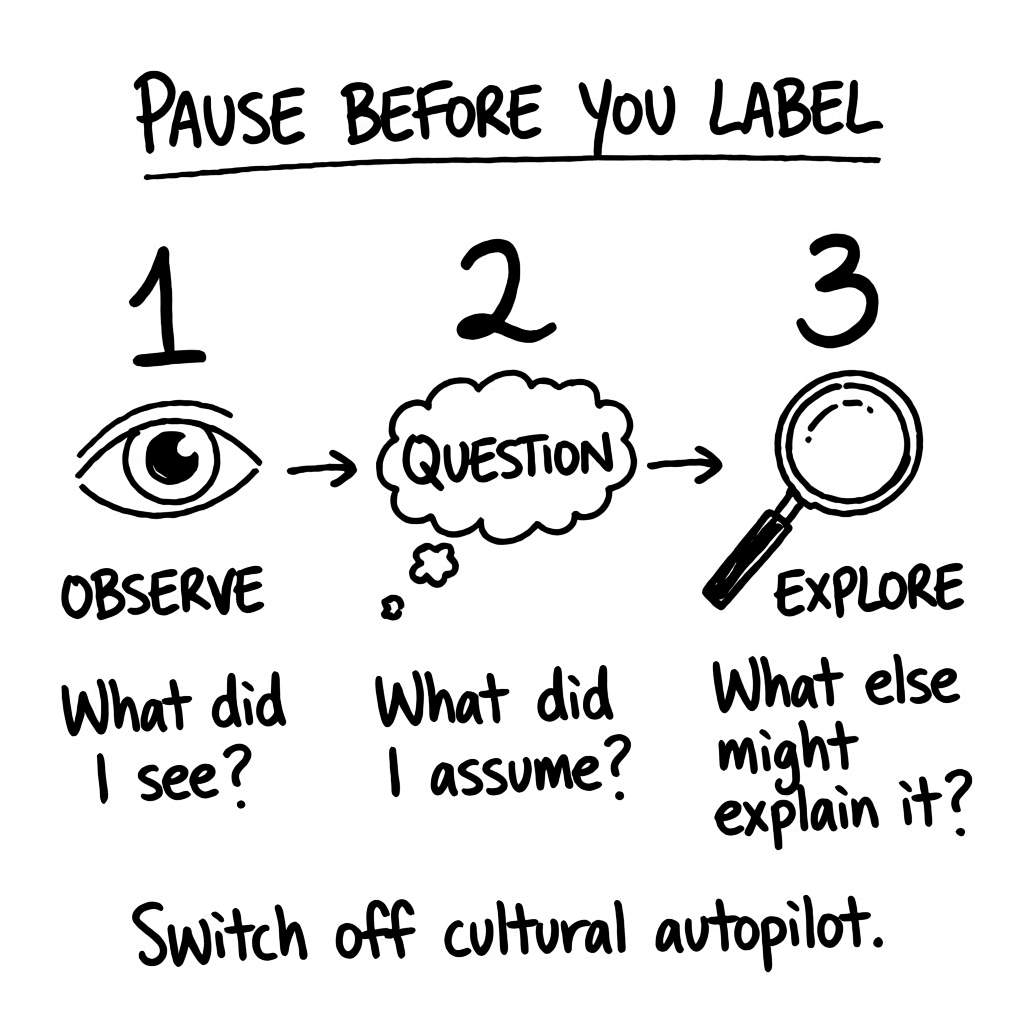
Try a simple three-step pause:
- What did I actually observe?
- What meaning did I immediately attach to it?
- What other explanation might fit the evidence?
That small exercise can change the quality of a conversation.
It can also make us more aware of our own cultural assumptions. We may discover that what we call “professional”, “confident”, “efficient” or “polite” is not culturally neutral. These words often carry expectations about how people should behave.
Someone does not reply immediately. We observe that they have not replied. Then, almost instantly, our brain may add a story: they are ignoring me, they are careless, they are not interested, or they disagree. The brain pushes us down that well known rabbit hole.
The goal is not to stop making judgments altogether. We need interpretation to function. The goal is to make our interpretations more conscious and more open to revision.
That is one of the practical powers of Cultural Intelligence.
Before changing another person’s behaviour, before labelling a situation, and before deciding that our way is simply common sense, pause.
You may be looking at the same thing.
But you may not be seeing the same meaning.
The author writes comics on Indian Cultural and nudges the young readers to move their thought processes and mindsets towards cultural intelligence. His comics can be found here
Someone does not reply immediately. We observe that they have not replied. Then, almost instantly, our brain may add a story: they are ignoring me, they are careless, they are not interested, or they disagree. The brain pushes us down that well known rabbit hole.